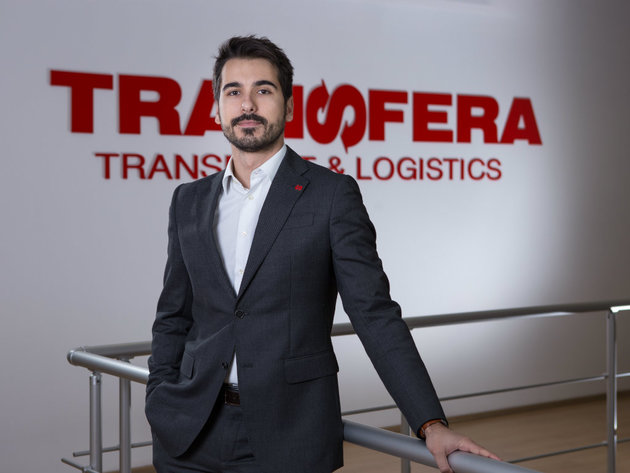
The shutdown of factories and entire industries due to the pandemic of the coronavirus, such as the automotive industry, causes fewer transports and, consequently, a decrease in the volume of business of logistics companies that play the role of connective tissue between manufacturing and trading companies. Logistics is certainly one of the hardest-hit sectors of the economy in this crisis – Srdjan Banovic, Head of Customer Support at the Transfera Company, tells eKapija.
An additional problem for
logistics companies, he points out, is the fact that because of all the
uncertainties of international road transport related to the potential closure
of borders (i.e. border crossings); rail and air transport have become
increasingly used alternatives.
eKapija:
How does Transfera operate in the given circumstances?
Our capacities and
quality of service must remain at the same level because we are a part of the
logistics chain in the procurement and production of items of strategic
importance. In a crisis like this, timely and accurate communication is one of
the most important things. I am particularly referring here to the very
beginning of a crisis when there is a multitude of information in circulation
from different sources, and when categorizing sources into reliable and less
reliable does not mean much. The value of information in such circumstances is
invaluable and Transfera made sure to, by combining official sources of
information and operational information from its day-to-day operations, inform
clients of any changes related to logistics in the country and the region on a
daily basis. The employees are divided into several groups, one of which is
sent to work from home, all with the aim of ensuring the full availability of
Transfera’s service in these circumstances.
eKapija:
Which employee protection measures have you implemented?
Even before the official
introduction of the state of emergency, Transfera implemented a number of
measures that were primarily aimed at minimizing the risk of infection within
the company premises. Disinfection tools, protective masks, and gloves were
provided for all employees, health procedures and recommendations regarding the
company and non-company protection measures were issued. Transport to and from
work was organized for our employees, which excluded the use of public
transport. On another note, we have seen an increase in the number of employees
in the last 7 years, and at the end of 2019 we tallied a total of 220 employees
at Transfera. That number remains the same to this day – one month after the
crisis has already begun. We clearly stated that the main priority of
Transfera, in addition to maintaining the health and safety of our employees,
was making sure all of our employees remain employed. This is a particular
challenge in the current situation that required the introduction of measures
of solidarity, but Transfera confirmed that team spirit is the factor that
always yields incredible results, so, during this time full of uncertainties,
every measure is initiated and applied in order to keep each family healthy and
safe.
eKapija:
What is the significance of e-commerce during this epidemic?
We have previously
emphasized the importance of digitalization and the complete transition of
business operations to the digital environment. Connecting organizational units
in this way lead to coordination that would otherwise require the physical
presence of employees in the same place. Applications that support video calls
and conferences are long on the way to becoming the standards of the future,
and the current situation has only accelerated the process. The operational
applications we use in our day-to-day operations are based on the cloud
platform so that they can be easily accessed by employees, even when they are
physically out of the company. This kind of networking was necessary to ensure
normal functioning in the work-from-home option.
However, due to the
nature of the business itself, employees in our customs clearance sector must
be physically present at the customs outlets where the process takes place. The
assumption is that this process will be organized in the future in the model of
simplified customs procedures in import and export and that the communication
will be based on electronic data exchange between customs agents and the
Customs Administration.
eKapija:
Has the crisis delayed the company’s plans and future investments?
– Transfera does not
change its long-term development strategy. The deadlines of our infrastructure
projects have been revised and adjusted to the current situation, but there
will be no deviation from the set goals. At the same time, in addition to all
the problems caused by the epidemic, reduced economic activity has opened a
space for us to launch reorganization and development projects with a focus on
applications that will elevate the company’s operations, and customer
experience of our services. These are all projects that have existed so far in
parallel with the operational activities of the company, and now significantly
more time will be devoted towards them.
eKapija:
How active are you on the humanitarian field and providing overall help during
this situation?
It is a known fact that
Transfera is a donor as well as an initiator in many charities that have a main
focus on children. Transfera always implies that aiding children should always
come first, which is why we focused our activities towards the procurement of
all necessary materials for the Institute for maternal and child care ”Dr.
Vukan Čupić” in Belgrade. We managed to acquire face masks, surgical robes,
protective visors, disinfection tools, etc in the shortest amount of time, and
we remain in contact regarding the further supply and delivery of all the
necessary materials.
Transfera also started an
initiative with our clients with headquarters in China to donate medical
supplies. While this operation remains in progress, a significant amount of
monetary aid has been transferred to the Health insurance fond of the Republic
of Serbia.
We also made our
logistics solutions available to the Italian Industrial association –
Confindustria Serbia, Chamber of Commerce of Serbia, economic department in the
South Korean embassy – KOTRA, Japan’s business alliance and to the Germany –
Serbian Chamber of Commerce (AHK Serbia) in collaboration with whom we are
initiating yet another humanitarian action that we will speak on withing the
next 10 days.
eKapija:
What are your expectations for the period after the epidemic and what is your
vision of this market after the global crisis?
We certainly expect a steady increase in economic activity, the gradual opening of companies and workflow which will in global capacity be lower than before the crisis. The difference between this crisis and the one in 2008. is that the negative consequences of this year’s crisis will reflect on both the supply and demand. It’s clear that we are expecting a new economic crisis on our hands, but the announced aid measures should soften its effects. There is a possibility of the market enlargement – large companies will affiliate smaller ones that are still battling to maintain its business. A similar situation might occur in the logistics market, especially in countries such as Italy and Spain.
Acquired from eKapija’s
online portal.